Category: Public Relations

Controlling the Controllables (or the Time I was Confused for Olympic Gold Medalist, Michael Johnson….No, Really)

JOHNSONOn more than one occasion, I’ve been told I can be intense at work. Not the “I’m a teepee, I’m a wigwam, I’m a teepee, I’m a wigwam” intense, but the “get out of his way when he’s coming down the hall” intense.

Whether it is my “game-day” face, the New Yorker in me or “get it done” mentality, I wouldn’t necessarily say I’m being intense. I would say, I’m controlling the controllables.

So, what does that really mean? Well, one of the aspects of public relations and media relations that I enjoy the most is the art form (yes, I believe it to be an art form) of creating the news and seeing/hearing it online, on the radio, television, print. For me the fun is in as much the journey as it is in the end result. It’s great to see/hear the reporter encounter the “Oprah Ah-hah Moment” and reap the rewards of that third-party credibility.

After all, in so many ways, that is the name of the game – – third-party credibility. It is one thing to have me tell you how compelling/important/awesome something is, but it is so much better else to have Robin Roberts, Katie Couric, your favorite reporter/columnist, the morning radio host, etc., say so.

However, one of the inherit challenges that goes along with this, is a little thing I like to refer to as Breaking News.

We all have tales of our stories being bumped, preempted, postponed because of breaking news. Our stories, events, news conferences, etc. compete with the real word and sometimes, the real word happens. And try as we may, the real world isn’t controllable. Therefore it is incumbent on us to control the controllables.

Below are some thought on how to do so. For the sake of this discussion, I’ve included thoughts when dealing with an event, news conference or story.

  • Be vigilant – If you are planning a media event or news conference, the real work starts days/weeks/months before the event. Is it the right story? Is an event or news conference the best way of getting your message across? How accessible is the event/conference to the media? What type of media are we targeting? Don’t rely on lists. Have actual one-on-one interaction with the media. Can materials be developed in case the media get called away day of the event? Spelling counts in whatever we do as does Associated Press style.
  • Ask questions of the media – Our work doesn’t end when the media say yes to our pitch. The more information we can get the better. Participate in the process of developing the story. How is the client plug going to be included? Is this going to be a roundup story or a feature? Interviewing other people? Will a reporter be attending the event or a camera person alone?
  • Update your client/manage their expectations – It is one thing for us to know that Breaking News happens. It’s another to make sure our clients understand it too. The more relevant information you can provide, the better.
  • Never say never – Now, just because breaking news bumps your story, it doesn’t necessarily mean you are finished. Consider producing your own b-roll of your event. Can a photo be used online? Can you do the interview a different time? Can you blog about your story? Post video or pictures on your company Facebook  Page and Twitter Feed?

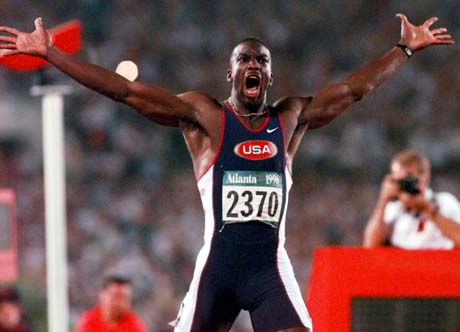
So, when was this slow, not shall I say “cut” man (that would be me) confused for Olympic Gold Medalist, Michael Johnson? And how does it relate to controlling the controllables? Prior to the Sydney Olympics, my client at the time was hosting a press event in Atlanta with spokesman, Michael Johnson. We had area kids at the press conference and Michael was going to introduce my client’s program that would feature Olympic hopefuls.

We had worked long and hard on the event. Two junior staff members (who I’m very proud/happy to say are now anything but junior; both are well-respected and quite successful) and I had spent the better part of a month developing the logistics behind the conference and worked the phones in making sure the media were well aware of the details.

As “luck” would have it, disgraced Major Leaguer, John Rocker, chose the same time as our event to call a news conference to discuss some “controversial” comments he had made. I received the call in the car service from my teammates who told me the news. I could hear from their voice that they were not only disappointed but a bit apprehensive as to what my reaction would be – – in retrospect, I guess I had my “game day” face on for a couple of weeks.

I believe – much to their surprise – I was calm. I knew we had controlled everything we could, and both the client and Michael were well-briefed on what we had done to prepare.

The news conference ended up going well and we had good media coverage (I guess Rocker really didn’t have all that much to say). As I was wrangling the press and letting Michael speak with different reporters, one woman came up to me with her son and asked me for an autograph.

I looked curiously at her and asked why she would want an autograph from me.

“You are Michael Johnson,” she asked.

No ma’am. The athletic looking gentleman in the Olympic sweat shirt, flanked with all sorts of media, THAT would be Michael Johnson.   Me, I’m just a PR guy who, like James Cagney, is a song and dance man (even though I can’t sing or dance) at heart.
Five PR Pet Peeves: Rolodex, Spaghetti, Spin, No Such Thing, and Taken Out of Context

030509peeve-01

I thought it might be fun or at the least a little cathartic to write about some of my “favorite” pet peeves regarding my given profession.

So, without further ado, I present to you – in no particular order – five of my all-time “please don’t say that” pet peeves:

#5: Client or prospect says, “I want to hire someone that has a good Rolodex” insinuating that the relationship we have precludes the story we are pitching.

Not so. This is a business and it is about creating the compelling story for the appropriate audience. The story is going to determine who we contact. These days with email, Twitter, Facebook, Skype, the phone, etc. it is easier than ever to reach the media. But reaching the media is one thing, providing them with a great story is something else. And that is how you build a relationship. Doesn’t matter how big my Rolodex is, if I don’t have the right story and the good PR person isn’t going to reach out to a reporter/producer just to reach out to them.  This leads me to another peeve of pets –

#4: Those who want to send the pitch out to everyone and see who picks it up.

Now this can be a client, account executive or anyone who isn’t interacting with the media. I call this the spaghetti theory (throw it on the wall and see what sticks) and it is one of the worst things you can do. The media get bombarded with pitches. It is our job to act as a gatekeeper for them in determining what pitch makes sense to the right media. Consistently sending out the wrong pitch to the wrong media will alienate your client and your credibility. I understand saying “no” to a client can be difficult, but managing expectations and explaining your rationale comes with the territory.

#3: Let’s spin that. Put a positive spin on that. Go do some PR on that.

Spinning something to me sounds like we aren’t telling the entire truth; holding something back. I hope that’s not what we do – – not sure I’d be able to look at myself in the mirror. Public relations is about getting all sides of the story out. You may not always agree, but a good public relations pro will illuminate a situation. We don’t lie, hold information or mislead.

#2: There’s no such thing as bad PR.

No. No. No. No. Not true. There is such a thing as news cycles and it has been shown that many societies can be forgiving (or somewhat forgetting). Really rather not be in a situation where how I react to something will dictate someone’s future. I could not disagree more with this. Or this –

#1: I didn’t say that. The reporter took what I said out of context.

Actually, odds are you did say that and the reporter just included what you said. Reporters don’t want to be called out for getting something wrong, not good career moves for them since they rely on being reputable. More often than not, those who have been “quoted out of context” did say it, but did not plan out what they were going to say. Before any interview, everyone should go through some form of media training, or – as I was taught – a Strategy For Answering Questions. Doing so will “amazingly” stop those “I didn’t say that” moments.

Surely you have your pet peeves (and don’t call me Shirley). What are yours? You agree with mine?

When a Great Placement Isn’t: How and Why To Manage Expectations

thumbsupdown2

I was thrilled. Front page of USA Today’s Life section. The “Featured Story” that went onto another page.  Cover picture of my client’s book and another picture from the book on the second page of the story. Client was the expert, quoted several times throughout the piece. Made me and everyone who called, emailed, and reached out to congratulate me, want to buy the book. Really was beyond my wildest expectations.

Problem was, it wasn’t beyond my client’s. Problem was, my client was looking for a book review. Problem was, I didn’t manage his expectations.

This was more than 15 years ago and I’m quite confident my client was happy with the placement, but was looking for any excuse not to pay. Looking back, I shouldn’t have been surprised. He was not a standup guy. That said, I didn’t do my job. That said, even more of a reason to manage expectations (unfortunately it is sometimes covering yourself). A lesson learned. A lesson I will never forget.

When it comes to managing expectations, it comes down to two things: Understanding the media and understanding your client (and your client can be your boss/CEO if you are on the corporate side of things or, if you are on the agency side your client can be…your client).

  • Understanding the media – It’s not good enough to “just” get the placement. Our work is just starting. We really need to fully understand what the media is thinking so we can provide the best opportunities for our client. Research the media ahead of time so intelligent questions can be asked and ideas to better the story can be offered. Who else are you interviewing? Would you consider talking to an industry expert who covers our company? When is the story going to run? Is it a round up story or are you featuring us? What segment will we be featured? How long will the segment be? Will the host be mentioning my client or is it the responsibility of our spokesperson to give the mention? The point is, there is so much leg-work that takes place after the media’s, “yes” that can impact the quality of the placement and set the expectations of your client.
  • Understanding your client – How much does our client understand the media and how much do they want to understand? This is important – – need to make sure we are talking the same language. Before any campaign or effort involving the media, it is critical to determine what the client wants to get from the placements. Sales? Brand awareness? Facebook likes? Increased employee good-will?  Communication of key messages? Our ability to successfully table-set what can be done and how it can be done will dictate the quality of the relationship.

Managing expectations is something every level public relations professional should understand and practice – – even if you aren’t the main client contact. Arming the client lead with the appropriate information can only be of a help.

What about you? Any stories of managing expectations gone awry? What was the one question you asked a reporter that you never thought you’d ask?

When it Comes to Covering the News, Who is the Boss?

alg-singer-bruce-springsteen-jpgLately, I’ve been thinking about the evolution of the media and what constitutes media. In its simplest form, the media tells/reports the news. Well, what is news? Again in its simplest form (hey, I know simple; some friends regularly call me simple), news is something that is noteworthy because it affects your head, heart or wallet. It may be newsworthy for one person, but not so much for another.

In this fast-paced, remote control, surf, sound bite society, headlines, teases and  tweets are more about attracting and drawing people in, and less about the true point or takeaway of the story. Not an issue for those who take the time to read, watch or listen to the story, but for those who just digest the appetizer (headline, tease, etc.), you may be getting an inaccurate account that you forward socially.

Wasn’t always this way.

It used to be the news was reported by journalists. Daily. 5pm. 6pm. 11pm. The thinking was they “called it down the middle.”

That begot 24 hour news which led to the need for more content. More content led to diversification. Might not be newsworthy to you or you, but definitely you and you. Not so much down the middle, but for those who it catered to, gospel. Journalists and commentators.

Online and social media. More content. More diversification. More passion and more involvement from you, you, you and me. Even less down the middle and more about first. Economics affecting some journalism. We all cover and forward what we deem to be the news to our friends, colleagues and in many instances people who “if you follow me, I’ll follow you.” In essence, “everyone” reporting the news.

Now, for someone like me, this can cause more than your fair share of challenges. Want to share one.

After my “I’m with the New York Times, Nobody Likes You. I’m on Deadline. Care To Comment?” blog, a former colleague commented:  “Good piece. I have to wonder: In the age of social media, when companies can comment directly to the end audience via social media channels and without the reporter filter, is failure to comment directly to the journalist as big a deal anymore? Not suggesting that social media completely defanged the traditional media; but the new dynamic is intriguing.”

Intriguing, indeed.  That said, I do believe you need to still respond to the media. When appropriate, you can dig deeper by blogging about the topic, posting on Facebook, Tweeting, etc., to get your message/side of the story. In other words, you need to be consistent in responding to the press and addressing your real audience directly through, among many channels, social media.

What you wouldn’t want to happen is not to respond to the reporter and just do your own thing. The reporter/outlet is going to be contradicting or not including your side and that message will reach the initial audience plus ensuing audiences the outlet or reporter may have socially.

Speaking of consistency, your messaging needs to be the same for all audiences – internal and external. Singing one tune to employees but a different externally can/will cause similar issues. Employees are hearing mixed messages and may be sending out contrary points to their social networks.

So, when it comes to covering the news, who is the boss? Not Bruce…not even George Steinbrenner or Tony Danza. Technology allows us all to be our own versions of the 4th Estate without those little “annoyances” of fact-checking or multiple sources. I hope I don’t sound like “old grumpy guy” here, but it is the world we live in now and the role of a public relations person is more critical then ever.

The Days of Major Media Using Your Release Verbatim are Over (Not That They Were Ever Under)

ImageLast week a good friend of mine who owns his own business asked me about sending out a news release. His concern was sending out the release the day after the Pope announcement – – would the media avoid the news release because of the Papal appointment? (as a funny aside, I saw several Tweets and posts from PR folks “advising” to send out your bad news today since the media was covering the news from the Vatican)

My feeling has always been the news release does not equal news coverage from the media. The only wire a reporter at The Denver Post is looking at on his or her computer is from the Associated Press, Reuters, etc. However, 15 years ago it was difficult to disprove that because news releases were routinely seen – verbatim – on sites like MSNBC, New York Times, Denver Post, etc.

The somewhat dirty little secret at the time was, because of relationships the press release companies had with different aggregators, client releases would be seen on high profile sites.

That was the good news. The bad news was the release was so buried within the site that it would take you – literally – seven or eight clicks to get to the release. This was before the days of Google (yes, there were days before Google) so the real likelihood of being seen was…what is the word I’m looking for…small.

This is less indictment and more comment on the times. For me, if you wanted to get a story in print, on television, etc., you needed to reach out to the media and build a relationship by (for those who have read my blogs before, here it comes) developing a compelling story for your real/appropriate audience.

Well, times have certainly changed, but some things remain the same: the best way to get a story out to your real/appropriate audience via the media is by developing the compelling story and unless you are a publicly held company, the media aren’t waiting for your news release.

Does that mean the news release is dead? Absolutely not. Like many who have aged, I believe it has gone through a facelift of sorts. I would categorize a press release as a type of content that can/should be used to help tell a story, build a brand, etc. Distributing the news release has benefits. It can rank on the search sites. It can be a part of your company blog. You can Tweet about it and post on your Facebook Page.

Along the same lines, the way we reach the media has most definitely changed, but whether it is Direct Messaging them on Twitter, following their Facebook Page, calling, emailing or texting the one thing remains the same – – the media want/need compelling stories. And, given the increased access to what they are looking for, there are no real excuses as to not pitching them something appropriate.

But what about the media itself? Media has changed over the year with bloggers, social sites and news aggregators altering the landscape and not necessarily following the “rules” of…your mother’s media. Today, someone may post a story without checking sources, Tweet it to his followers and – when he/she realizes a mistake was made, sends a correction that isn’t “consumed” by everyone who received the first Tweet.   Well, this is a topic for another day.

Another friend of mine shared a great infographic talking about the changing face of PR.  The bottom part of it was my favorite. Those elements that remain: relationships, storytelling, thought leadership, authenticity, facts, speed, preparedness and credibility.

“I’m with the New York Times, Nobody Likes You. I’m on Deadline. Care To Comment?”

MicrophoneIn my last blog, I talked about the benefits of presenting a contrarian viewpoint when proactive pitching. What happens when a reporter calls you with a story he/she is doing and it isn’t…how should I say, the best story.

In my current position I act as my company spokesperson. Couple of years ago I received a call from a reporter. They were running a segment later that day about how “nobody” uses my product anymore and wanted a comment from me. Couple of things:

  •  Really have to be careful with definitive words – – nobody, everyone, etc. Really? Nobody uses it? In this instance, some still use. Not as many as years ago, but some do.
  • “Love” it (need to get a sarcasm button on the keyboard) when the press call for an immediate comment on a story they are on deadline for – – my experience has shown most times (not always) the press already knows what they want you to say. They are looking for that contrarian viewpoint.

Now, just because the press reaches out to me doesn’t mean I have to respond. Well, it sort of does because – these days – the press will include the dreaded, “the company refused to comment” or “we reached out to the company but have not heard word back.”

I always try to get back to the press with some sort of response. May not be the response they are looking for – – there are situations where I do say, “I can’t talk to that for competitive or legal or security reasons” but they are answers and – most important, they are the truth.

What about my “nobody uses your product” example? Well, I could’ve given them the data supporting usage of the product, but since I asked some questions about the segment, I learned that they had interviewed consumers.

Didn’t think a corporate suit giving numbers was the answer. Thought it would sound too cold and calculated, compared to consumer real-life experiences. Instead, I asked if they would talk to a local business owner who relies heavily on my product. The strategy was to counter those real people with another real person.

The reporter agreed and I quickly found the right person. Completed the story for (or dare I say with) the press.

And I think that is the key, whenever possible work with the media. Understand what they are looking for and accommodate as best you can. Any thoughts? Please let me know.

High and Tight: Pitching the Other Side of the Story to the Press

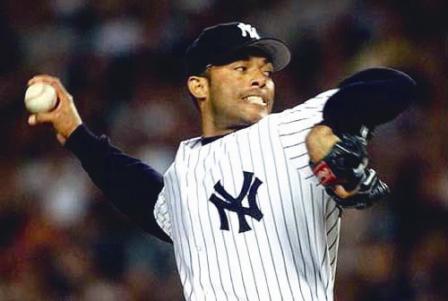
marianoOne of the more interesting aspects of public relations and media relations for me involves the idea of pitching a complete story to the press, including – when appropriate – the contrarian or other side of the story. Why would I provide/include something that could be perceived as negative to my client, company or cause?

Comes down to a couple of reasons:

– The media is supposed to tell a well-rounded news story (I know, that topic can be for another blog). I’m not talking about commentaries, editorials or the such, but for the “just the facts” side of the fence; all aspects of a story should be reported.

– If I can give them the “full story” I have a better shot of having it run.

– Whether it is providing third-party information, an analyst or trade reporter who covers my industry or the name of a spokesperson I know has a different view, I’m helping the reporter/producer by doing some of their homework for them (I’m also framing the story as best I can).

Sounds intriguing Andy, but do you have an example? Why yes, yes I do.

I cut my teeth from a media relations perspective during my time at Planned Television Arts (now Media Connect); where we specialized in promoting books through radio, television and print interviews. We worked with the big publishing houses on all matter of topics – – business, celebrity, self-help, lifestyle, etc. – – and it was all about determining what the compelling story was for the appropriate audience.

Now this took place sometime about 1994-1995, so please forgive me if some of the details are off a bit, but the thinking still holds true today and is a solid case study of sorts. Back in the day, we were working with a publisher and two authors (both doctors) on a book they had written about the different health benefits of drinking wine.

One of the chapters focused on the premise that if you were pregnant and routinely had a glass of red wine prior to being pregnant, there were no health risks to having a glass during your pregnancy (throughout the book, the doctors mentioned to always check with a physician before doing anything). This was the chapter we decided to focus on in promoting the book.

Compelling? Check. Controversial? You bet. Publisher and authors wanted to go after national television. To do so, we said, we would want to finish the story for the national press by providing them with the other viewpoint. We explained that for a national segment, the press will want/need to get the other side of the story and if we could give them that side, all the better.

Here’s the thing (there is always a thing). As a public relations professional, we need to know when it is necessary/appropriate to provide the other side of the story. We also need to be strategic in providing a contrarian view that is reputable but not so great in what they that they undermine your messages.

We asked the doctors what groups would have some strong feelings about their chapter. They mentioned an organization whose cause was Fetal Alcohol Syndrome (FAS) and said they have had conversations with the organization’s spokeswoman.

To make a long blog short (too late), we reached out to the organization, provided their spokesperson with an advance copy of the chapter and got her to agree to make herself available for interviews.

Larry King Live and Today.

Both producers used our people exclusively for their segments because we did their homework for them. Larry King was first and Today was the following morning (we had the better looking doctor do both interviews and flew him into the Today Show from DC while the woman did the Today interview via satellite – – whenever possible I’ve found it better to do interviews, especially controversial, in-person). We didn’t spokesperson train their person or give her insights we came across from talking to the producers, etc.

Suffice to say, the segments went very well. Publisher and authors were pleased, producers thanked us for helping with the segments and the opposing organization was happy to be included and felt they got their messages across. Reality is, the fourth estate is strapped for time and resources. A good pitch including all sides of the story readily available is going to be a tremendous help.

What do you think? Does it make sense to include the contrarian side of things? In my next blog I’ll talk about responding to a press inquiry and completing that story in such a manner that best represents your client or company.

Proactive Media Relations: Do’s and Not Do’s

images

I recently blogged for the company I currently work for about how the strategies and tactics used in spokesperson training can be used in business situations. Reaction and feedback I received was positive, which got me to think about blogging on my own about public relations and media relations.

Lots to talk about, here. Proactive versus reactive media relations. How to best work with the press. How to determine when and if the press have any interest in working with you. Crisis communications.

I’ve been lucky enough in my career to have worked the agency and corporate side of things. Done and seen a bunch – – Fortune 100 companies, Olympics, NASDAQ, NYSE, celebrities, Chapter 11, emergence, product launches, etc.

I was sort of on the proverbial fence when – after I “liked” a former colleague of mine’s post that said: Shameless client plug. But so proud of this placement, I received a comment back from her:

Andy, I vividly remember securing a hit in the South Bend Tribune back in the day, and I was absolutely elated. I felt silly for being that excited about such a tiny paper, and you told me, “The day you stop feeling excited about a client hit, you need to get out of this business.” Good advice to this day. 🙂

So, I’m taking this as a sign. What will follow will be periodical musings about my chosen craft, but before I get started, I want to thank the late Ken Fairchild who taught me everything I know about spokesperson training, or as he called – – The Strategy of Answering Questions. Ken was a good man who is missed.

So, let’s kick this off by talking a little proactive media relations. Media relations can be one of the most rewarding aspects of public relations. Seeing the fruition of your work – from developing a compelling story for the appropriate journalist to pitching that reporter, to seeing yourself, your client or your boss on-air/in-print, on the Internet – – should be a great feeling.

Working with the media does have an inherent set of obstacles. Arguably, the biggest hurdle we face is that we are in an industry where many of our peers do not always work smart or strategically with reporters, editors and producers.

Whether it is sending out mass mailings, blindly reaching out to an outlet that isn’t right for a particular story or e-mailing attachments to an inappropriate contact, some of our brethren have created an adversarial relationship with the media.

Let us be sure that we do not demean or devalue what we do.  When we do things the right way – that is create and develop a great/compelling story and provide it to the appropriate audience (via the media) – we become a tremendous asset to the media and our company/client.

A big/critical part of our job is acting as a gatekeeper (are you the keymaster) of sorts for the press. To do so, we must understand what makes news and what is important to the press (and their real audience) AND we have to manage the expectations of our client, boss, team, etc. I can’t tell you (but I will, otherwise the blog will be really short) how many times I said “No” during brainstorms, client meetings, etc.

Whenever I did, I would explain why and – whenever possible – give an alternative idea. Back in the day, it was very common to hear, “I could see this on Oprah” for a pitch that was anything but “O-worthy.” Having “reality check” conversations may be difficult to have at the time, but it is best to have them instead of alienating the press with a pitch that doesn’t resonate. The reality is, reporters/producers have long memories and will not take calls/delete e-mails from those who are so off base that you are wasting their time.

A producer at TODAY once told me he wished more public relations professionals were like me – – “when I take your call or read your e-mail, I know you’ll have something relevant for me. I may not always take the pitch, but you’ll be in the ballpark.”

Well, that was pretty painless (at least for me). Hopefully, it was something of note for you. Please comment and let me know what you think and if you have something you want me to blog about. You can connect with me on Linkedin or follow me on Twitter. Thanks.